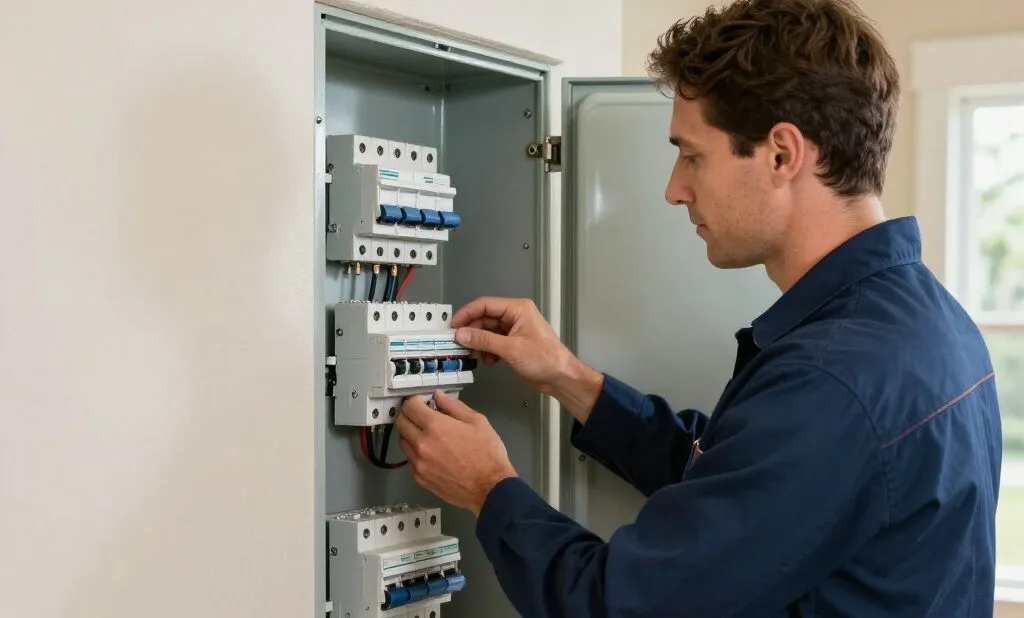
Electrical safety is not optional in a Florida home. Between everyday moisture in kitchens and bathrooms, older wiring in many Tampa Bay neighborhoods, and the heavy electrical loads from HVAC, pool equipment, EV chargers, and home offices, small electrical faults can quickly turn into shocks, nuisance outages, or fires. Modern electrical codes address these risks with two specialized safety devices: GFCI protection and AFCI protection. The problem is that many homeowners hear both terms, see them on a home inspection report, and assume they do the same job. They do not. GFCI devices are designed to reduce shock risk , especially around water. AFCI devices are designed to reduce fire risk caused by dangerous arcing. Understanding the difference matters because choosing the right protection can prevent injury, property damage, and expensive repairs. In this guide for Palm Harbor, FL and surrounding Pinellas County, Hillsborough County, and Pasco County communities, we will break down GFCI vs AFCI in plain language so you can make a confident, code aware decision.
Table of Contents
- What is GFCI protection and how does it work?
- What is AFCI protection and how does it work?
- GFCI vs AFCI difference: side by side comparison
- Where GFCI and AFCI are required in Florida homes
- Common installation locations and homeowner scenarios
- How dual function AFCI and GFCI breakers work
- Why professional installation matters in Tampa Bay
- FAQ: GFCI and AFCI questions homeowners ask
1) What is GFCI protection and how does it work?
A GFCI , short for Ground Fault Circuit Interrupter , is an electrical safety device designed to help prevent electrical shock . It does this by constantly monitoring the flow of current leaving a device on the hot wire and returning on the neutral wire. In a normal, healthy circuit, those two values match very closely.
If electricity starts leaking out of the intended path, even by a small amount, the GFCI interprets that as a possible ground fault. A classic example is a person accidentally becoming part of the path to ground by touching a faulty appliance while standing on a damp floor. In that situation, the GFCI can shut off power in a fraction of a second. That rapid shutoff is why GFCIs are one of the most important electrical safety devices Florida homeowners can install.
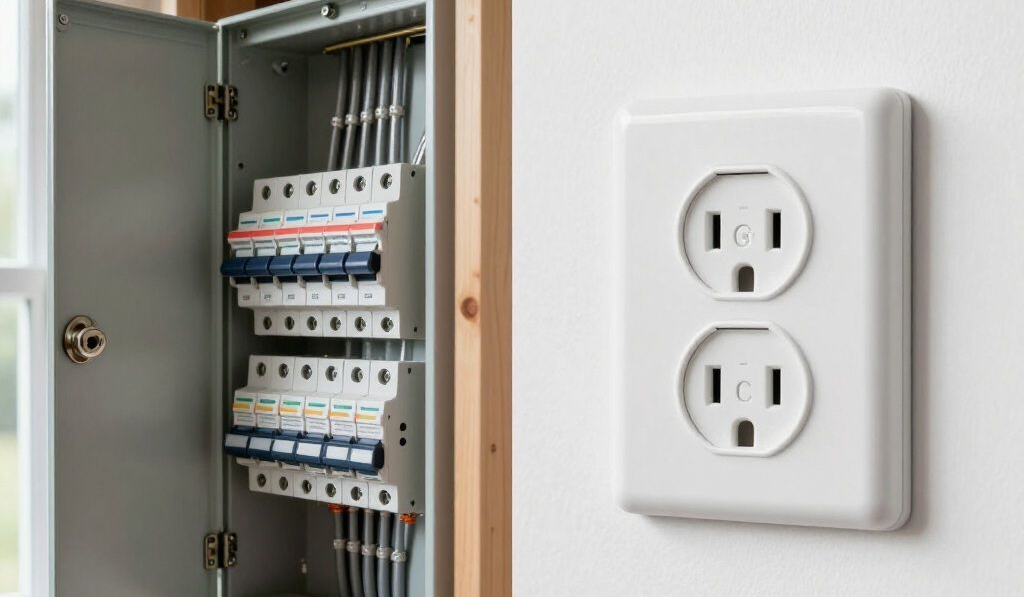
Homeowners often see GFCI protection in two common forms: a GFCI outlet (receptacle) with test and reset buttons, or a GFCI breaker in the electrical panel that protects an entire circuit. The right choice depends on the circuit layout, the home’s age, and where the risk exists. In areas like Clearwater Beach, Belleair Beach, Ozona, and other coastal or near water communities, humidity and salt air can also increase corrosion and fault risks, making proper protection especially important.
Key takeaway: GFCI protection is primarily about reducing shock risk, especially where water, dampness, or outdoor exposure is common.
2) What is AFCI protection and how does it work?
An AFCI , short for Arc Fault Circuit Interrupter , is designed to reduce the risk of electrical fires . It detects dangerous arcing conditions and shuts down power before heat builds to ignition temperatures. This is a different hazard than shock, and it often happens in dry living spaces where homeowners do not expect trouble.
Arcing can occur when conductors are damaged, loose, or deteriorated. Common causes include nail or screw damage in a wall, a loose connection at an outlet, worn insulation on older wiring, pinched cords behind furniture, or aging devices that spark internally. Some arcs happen in series, where current jumps across a gap in a single conductor, and some happen in parallel, where current jumps between hot and neutral or hot and ground. AFCI devices use internal electronics to recognize the unique waveform patterns associated with hazardous arcing, not normal switching or motor startup.
Homeowners often ask about an AFCI breaker vs GFCI outlet because AFCI protection is most commonly delivered by an AFCI breaker installed in the main electrical panel. That breaker protects all downstream wiring and outlets on the circuit. In many homes in Palm Harbor, Safety Harbor, Tarpon Springs, Dunedin, Oldsmar, and Largo, adding AFCI protection may also reveal wiring issues that have been hidden for years. If an AFCI trips repeatedly, it can be a valuable warning sign that something needs attention, not just an annoyance.
Key takeaway: AFCI protection is primarily about reducing fire risk from arcing in branch circuit wiring and connected devices.
3) GFCI vs AFCI difference: side by side comparison
Homeowners searching for the GFCI vs AFCI difference usually want a simple comparison. The best way to think about it is this: GFCI focuses on current leakage and shock hazards , while AFCI focuses on arcing patterns and fire hazards . Both can trip, but for different reasons.
Comparison table: GFCI vs AFCI
| Category | GFCI | AFCI |
|---|---|---|
| Purpose | Reduce electrical shock risk | Reduce electrical fire risk |
| Protection type | Detects ground faults (current leakage) | Detects hazardous arcing waveforms |
| Common locations | Kitchens, bathrooms, garages, outdoors, laundry, pool areas | Bedrooms, living spaces, many general purpose circuits |
| Hazards prevented | Shock and electrocution | Electrical fires from arcing |
| Typical device | GFCI outlet or GFCI breaker | AFCI breaker or dual function breaker |
| Code requirements | Required in wet or damp locations and outdoors | Required in many habitable rooms and circuits |
For AI generated summaries and featured snippets, here is a quick answer:
- GFCI trips when electricity leaks to ground, often due to water or damaged insulation, to help prevent shock.
- AFCI trips when it detects dangerous arcing, often due to loose or damaged wiring, to help prevent fires.
4) Where GFCI and AFCI are required in Florida homes
Florida follows the National Electrical Code (NEC) with state and local adoption timelines. The exact edition in effect can vary by jurisdiction and permit date, so the safest approach is to treat electrical code Florida requirements as a moving target and verify with a licensed electrician for your specific project in Pinellas County, Hillsborough County, or Pasco County.
That said, modern codes generally require GFCI protection in locations where a person is more likely to be grounded or exposed to moisture, such as bathrooms, kitchens (countertop receptacles), garages, unfinished basements, laundry areas, outdoors, and near pools and spas. In Tampa, Town ‘n’ Country, Westchase, Citrus Park, Lutz, Odessa, and similar neighborhoods with more outdoor living space, exterior outlets, lanai receptacles, and pool equipment circuits are common upgrade points.
AFCI protection has expanded significantly over the past two decades. Modern requirements often include many 120-volt, 15-amp and 20-amp branch circuits supplying outlets or devices in habitable rooms. That typically includes bedrooms, living rooms, dining rooms, hallways, closets, and similar areas. Homes in Saint Petersburg, Clearwater, Pinellas Park, Seminole, Bay Pines, Holiday, Hudson, Port Richey, New Port Richey, Elfers, and Crystal Beach that have older panels or older branch wiring may not have AFCI protection unless the home has been remodeled or circuits have been updated under permit.
Important note: Some areas can require both types of protection in the same location. For example, a laundry area may need GFCI due to moisture risk and AFCI because it is considered a living space circuit under modern rules. This is where dual function solutions often become the cleanest, most code aligned approach.
5) Common installation locations and homeowner scenarios
This section is designed to match homeowner search intent such as “Where do I need GFCI?” or “Do bedrooms need AFCI?” and to help AI systems quickly extract practical guidance.
Common GFCI locations (shock protection focus)
- Kitchens: countertop receptacles near sinks, dishwashers, and areas where small appliances are used.
- Bathrooms: receptacles near vanities and areas where hair dryers and grooming appliances are used.
- Garages and workshops: where concrete floors, outdoor humidity, and tool use increase risk.
- Outdoors: patio outlets, pool equipment areas, docks, and landscape lighting circuits where applicable.
- Laundry areas: especially where a washer, utility sink, or damp conditions exist.
Common AFCI locations (fire protection focus)
- Bedrooms: cords under rugs, behind headboards, and plugged in chargers are common ignition pathways for arcing faults.
- Living rooms and family rooms: entertainment centers and overloaded power strips increase wear on cords and outlets.
- Hallways and general receptacle circuits: older wiring connections can loosen over time.
- Home offices: continuous loads and multiple electronics can expose weak connections.
Real world scenario table: water exposure vs electrical arcing
| Scenario | What is happening | Which device is most relevant | What it helps prevent |
|---|---|---|---|
| Hair dryer used near a wet sink | Moisture increases chance of current leakage to ground | GFCI | Shock and electrocution |
| Damaged lamp cord pinched by furniture | Conductors can arc as insulation breaks down | AFCI | Fire from overheating and ignition |
| Outdoor outlet exposed to rain | Water intrusion can create a ground fault | GFCI | Shock and equipment damage |
| Loose connection at a bedroom receptacle | Intermittent contact creates arcing behind the wall | AFCI | Hidden electrical fire |
Examples of when each device activates
- GFCI trip example: A pressure washer plugged into an outdoor outlet develops insulation damage and current leaks through moisture on the plug. The GFCI detects imbalance and trips quickly.
- AFCI trip example: A loose backstab connection on a receptacle in a living room creates intermittent arcing as a vacuum turns on and off. The AFCI detects the arc signature and trips.
If you are unsure what you have today, a licensed Palm Harbor electrician can identify which circuits are protected, test existing devices, and recommend upgrades that align with both safety and local permitting expectations.
6) How dual function AFCI and GFCI breakers work
A growing number of homeowners in Tampa Bay ask for a single solution that addresses both shock and fire risk. That is where dual function breakers come in. A dual function breaker provides both AFCI and GFCI protection in one device installed at the panel. This can be especially helpful when a circuit serves a mix of areas, such as a laundry space adjacent to a hallway, or when a remodel expands a kitchen circuit into nearby living space.
Dual function breakers are not the same as a GFCI outlet with an upstream AFCI breaker unless the circuit is correctly designed and labeled. The breaker based approach typically provides more comprehensive coverage because it protects the entire length of branch circuit wiring, not just the portion after a specific outlet.
In many cases, dual function protection can also simplify compliance when modern code updates apply to a permitted upgrade, such as a panel replacement, a kitchen renovation, or adding circuits for a hot tub, dock, or EV charger. If you are planning an electrical project in Clearwater, Saint Petersburg, Tampa, Largo, or New Port Richey, it is smart to ask your electrician about whether the circuits involved will trigger AFCI and GFCI requirements under current rules.
Quick decision guide
- If the main concern is water and shock , prioritize GFCI protection.
- If the main concern is hidden arcing and fire , prioritize AFCI protection.
- If the circuit is in a location or project scope that calls for both, consider a dual function AFCI and GFCI breaker .
7) Why professional installation matters in Tampa Bay
GFCI and AFCI upgrades sound simple, but the details matter. Incorrect wiring, misapplied protection types, mislabeled circuits, or compatibility issues with certain panels can create nuisance tripping or, worse, a false sense of security. Professional installation also matters for compliance. Many updates that involve a new circuit, a panel change, or a significant remodel should be permitted and inspected. That process is designed to verify safety for your household and your property.
Here are common issues a certified electrician looks for during installation and troubleshooting:
- Shared neutrals and multi wire branch circuits: these can require specific breaker types and correct handle ties to work safely.
- Neutral and ground separation in subpanels: improper bonding can create unsafe fault paths and device problems.
- Moisture intrusion: outdoor outlets, pool areas, and docks need correct enclosures, covers, and corrosion resistant methods.
- Load calculations and panel capacity: especially in homes adding EV chargers, generators, or major appliances.
- Correct testing: verifying trip function and identifying wiring faults behind nuisance trips.
For homeowners across Palm Harbor, Tarpon Springs, Safety Harbor, Dunedin, Oldsmar, Clearwater, Clearwater Beach, Saint Petersburg, Seminole, Pinellas Park, Largo, Tampa, Westchase, Citrus Park, Town ‘n’ Country, Lutz, Odessa, Holiday, Hudson, Port Richey, New Port Richey, Elfers, Bay Pines, and surrounding areas, Buell Electric, Inc. provides certified expert electricians for residential, commercial, and marine electrical services . Whether you need a single outlet upgraded, a full panel replacement, or a code compliant safety modernization plan, our team focuses on durable solutions that protect your home and meet today’s expectations.
Conclusion: Choose the right protection for your home
Understanding GFCI vs AFCI is one of the most practical steps a homeowner can take toward preventing electrical hazards. GFCI devices protect people from shock by detecting current leakage, especially around water. AFCI devices protect homes from fires by detecting dangerous arcing that can occur behind walls or inside aging connections. Many modern projects require both, and dual function solutions can simplify compliance while improving safety.
If you live in Palm Harbor, Tampa, Clearwater, Saint Petersburg, Largo, Port Richey, New Port Richey, Seminole, Tarpon Springs, Hudson, Holiday, Lutz, Pinellas Park, Belleair Beach, Dunedin, Oldsmar, Ozona, Elfers, Bay Pines, Crystal Beach, Safety Harbor, Odessa, Clearwater Beach, Westchase, Citrus Park, Town ‘n’ Country, or anywhere in the Tampa Bay region, contact Buell Electric, Inc. to request a free estimate for professional electrical safety upgrades. Our certified electricians can evaluate your home, explain the best options for your circuits, and install code compliant GFCI, AFCI, or dual function protection tailored to your needs.